
イントナルモーリというユニットを昨年始めました。 "Pastrale Urbaine" 3曲構成の組曲からスタート。 詳細はこちらのページを。
さて、今、私が思うイントナルモーリをここに書いておこうと思います。
私
イントナルモーリというユニットを昨年始めました。 "Pastrale Urbaine" 3曲構成の組曲。 詳細はこちらのページを。
さて、今、私が思うイントナルモーリをここに書いておこうと思います。
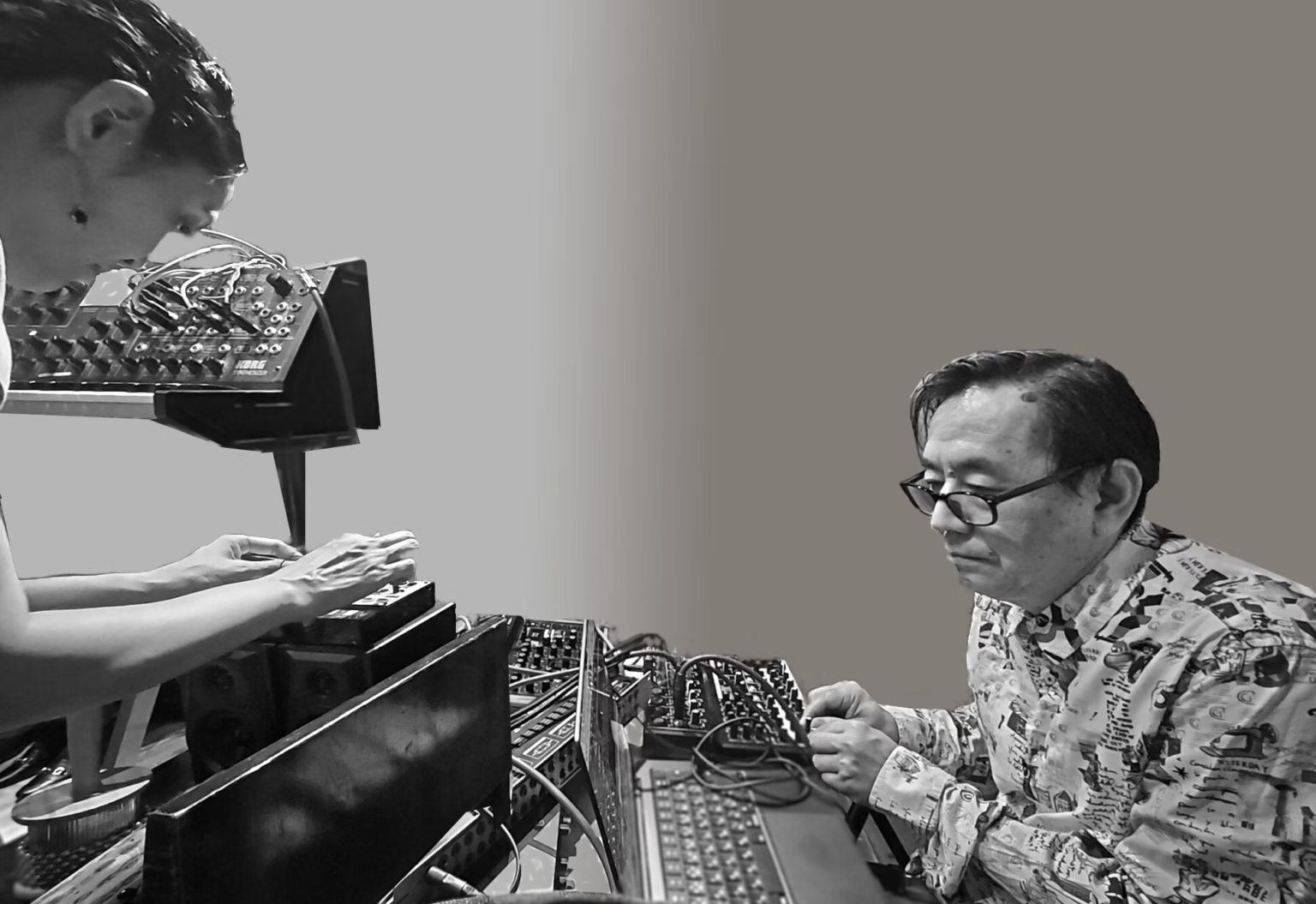
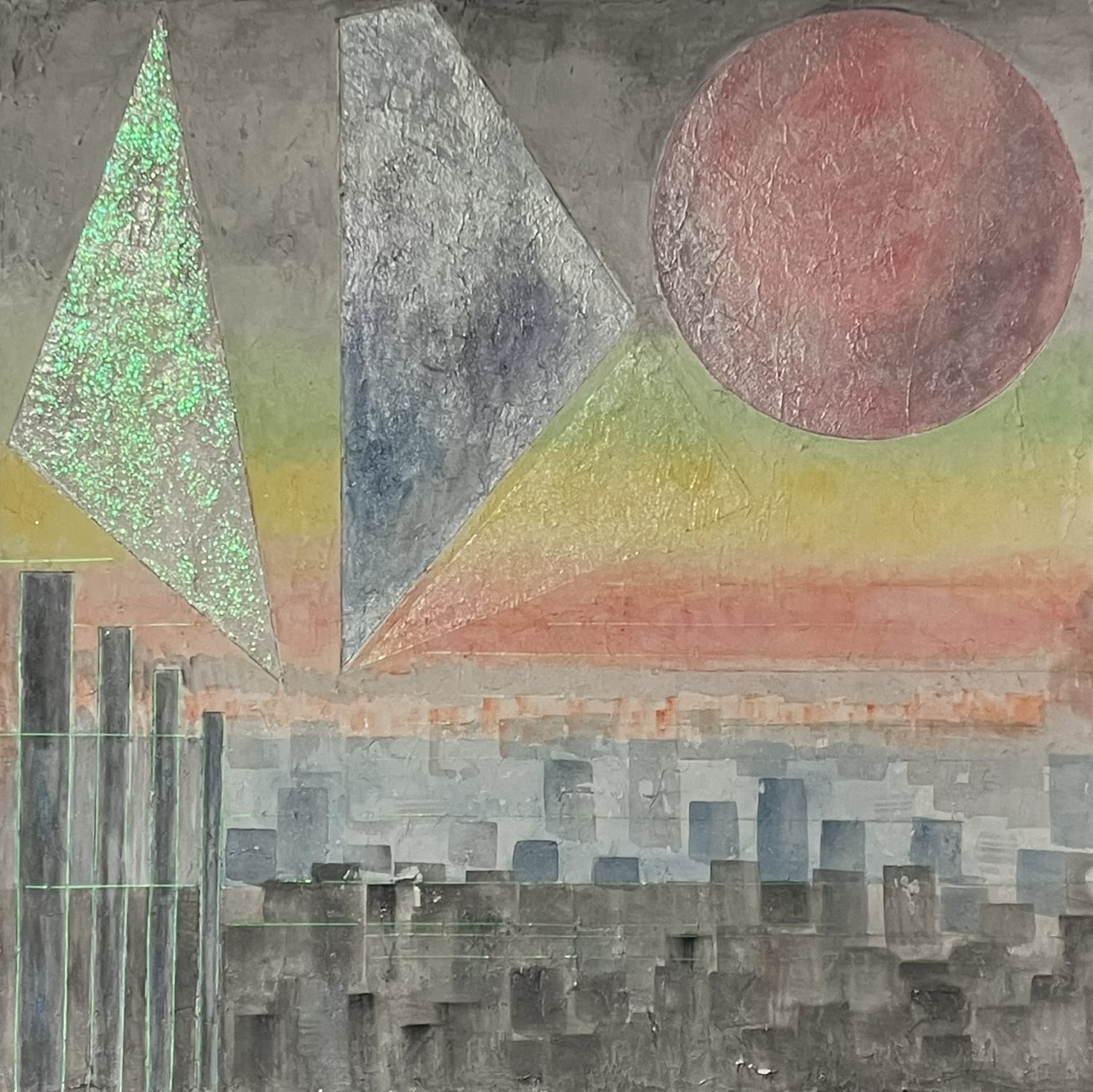
私たちが作ろうとしているものは、うまく説明できるものではないのかもしれません。上野耕路氏の構造的な音楽を核に、声やノイズ、映像、絵画、言葉が、イントナルモーリのバランスでちりばめられます。 そして、騒音が秩序を帯びる瞬間を、観察します。 この「ちりばめる」という行為は、私にとって、人生は実験なり、という長年の思いの延長線上にあります。
イントナルモーリという名前は、1913年に生まれた騒音楽器から来ています。 ルイージ・ルッソロが木箱とクランクで作り上げた、音楽と非音楽の境界線を壊すための装置。 私たちはその装置を持ちません。 ただ、その装置が宿していた問いに似た何かが、私たちにはあります。
たとえば、昨年リリースした組曲"Pastrale Urbaine"。 テクノポップの整然とした拍節は、揺れる声とノイズによって静かに変容するものでしょうか。 その問いにひとつの確実な答えは出ません。だから私たちは実験を続けます。
成功と失敗のことも、あまり考えていません。 完成を決め打ちした瞬間、何かが死ぬ。勢いに任せれば、着地点はわからない。まるでハイゼンベルクの不確定性原理のように——位置を確定しようとすると、運動量が失われる。 その揺らぎの中にこそ、音楽の生命があると思っています。 昨日の完成を、今日の手で壊すことがあります。 失敗と呼ばれた場所の中に、地図にない座標が眠っていることがあります。 結果よりも、実験そのものに興味があります。
オリジナルの騒音装置は、戦火の中で焼失しました。 しかし問いは残りました。
この先に何があるのか。 何もないのか。
それすらも、実験の続きだと思っています。
Intonarumori
We started this unit last year. "Pastrale Urbaine" — a suite in three movements. Details on this page.
Here is what Intonarumori means to me, right now.
What we are making may not be something we can easily explain. Built on the structural music of Koji Ueno, we layer in voices, noise, and silence. Silence, too, is a presence. Around that core, voices, noise, images, paintings, and words are scattered — balanced by Intonarumori. And we observe the moment noise begins to take on order. For me, this act of scattering is an extension of a long-held belief: life itself is an experiment.
The name Intonarumori comes from a noise instrument born in 1913. Built by Luigi Russolo — a machine of wood and cranks, designed to destroy the boundary between music and non-music. We do not own that machine. But something resembling the question it carried still surrounds us.
Take "Pastrale Urbaine," released last year. Can the ordered pulse of technopop be quietly transformed by shifting voices and noise? There is no single certain answer. So we keep experimenting.
We do not think much about success or failure. The moment we fix a destination, something dies. The moment we follow momentum, we lose sight of where we land. Like Heisenberg's uncertainty principle — the more precisely we define position, the less we know of momentum. We believe it is within this uncertainty that music finds its life. Sometimes we dismantle yesterday's completion with our own hands. Sometimes an unmapped coordinate lies dormant in what others call failure. We are interested in the experiment itself, not the outcome.
The original noise machine was lost to the flames of war. But the question remained.
What lies ahead? Or is there nothing?
Even that is part of the experiment.
